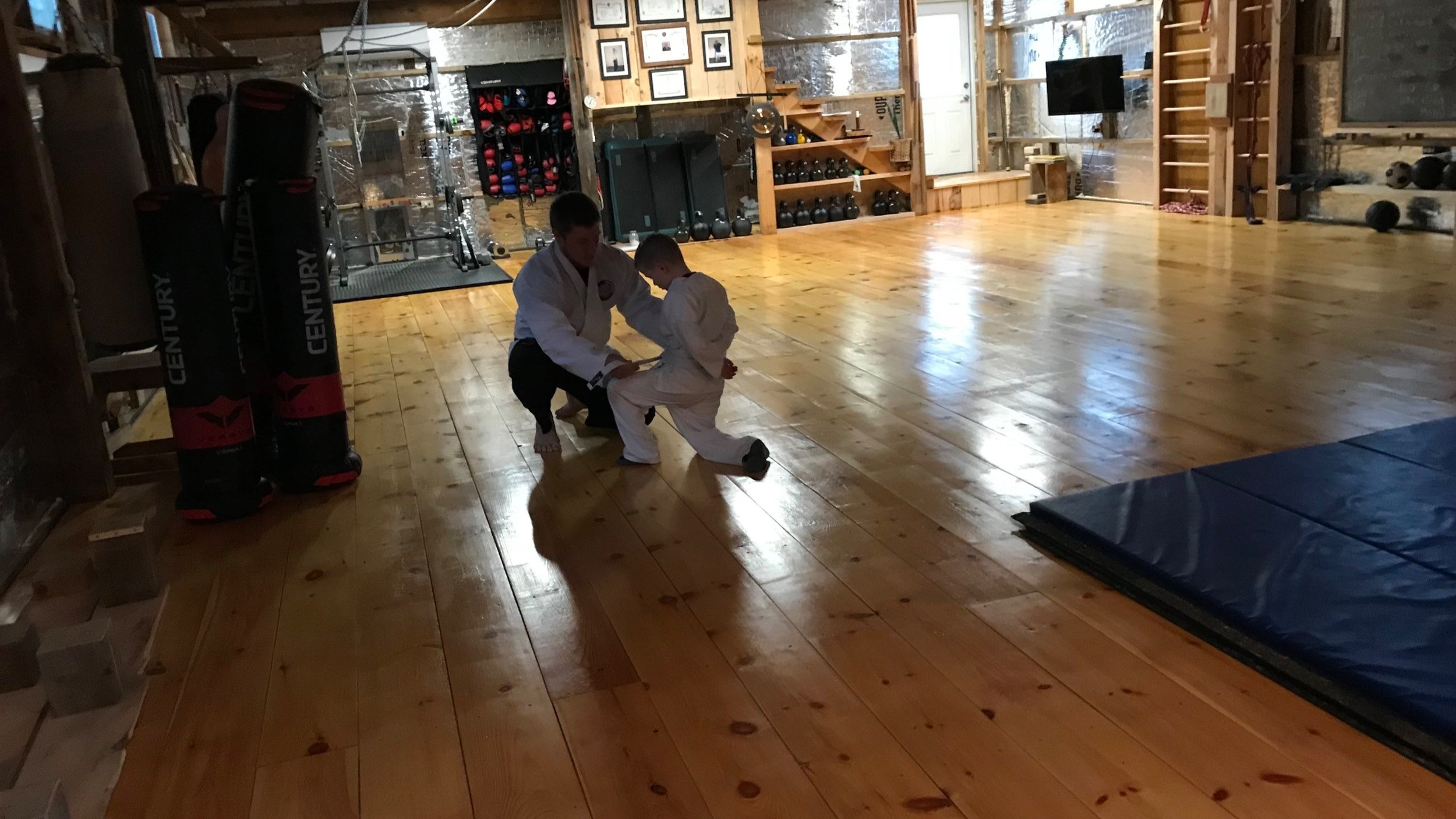
Welcome to our Whe Chun Community
Our Programs
Traditional Martial Arts
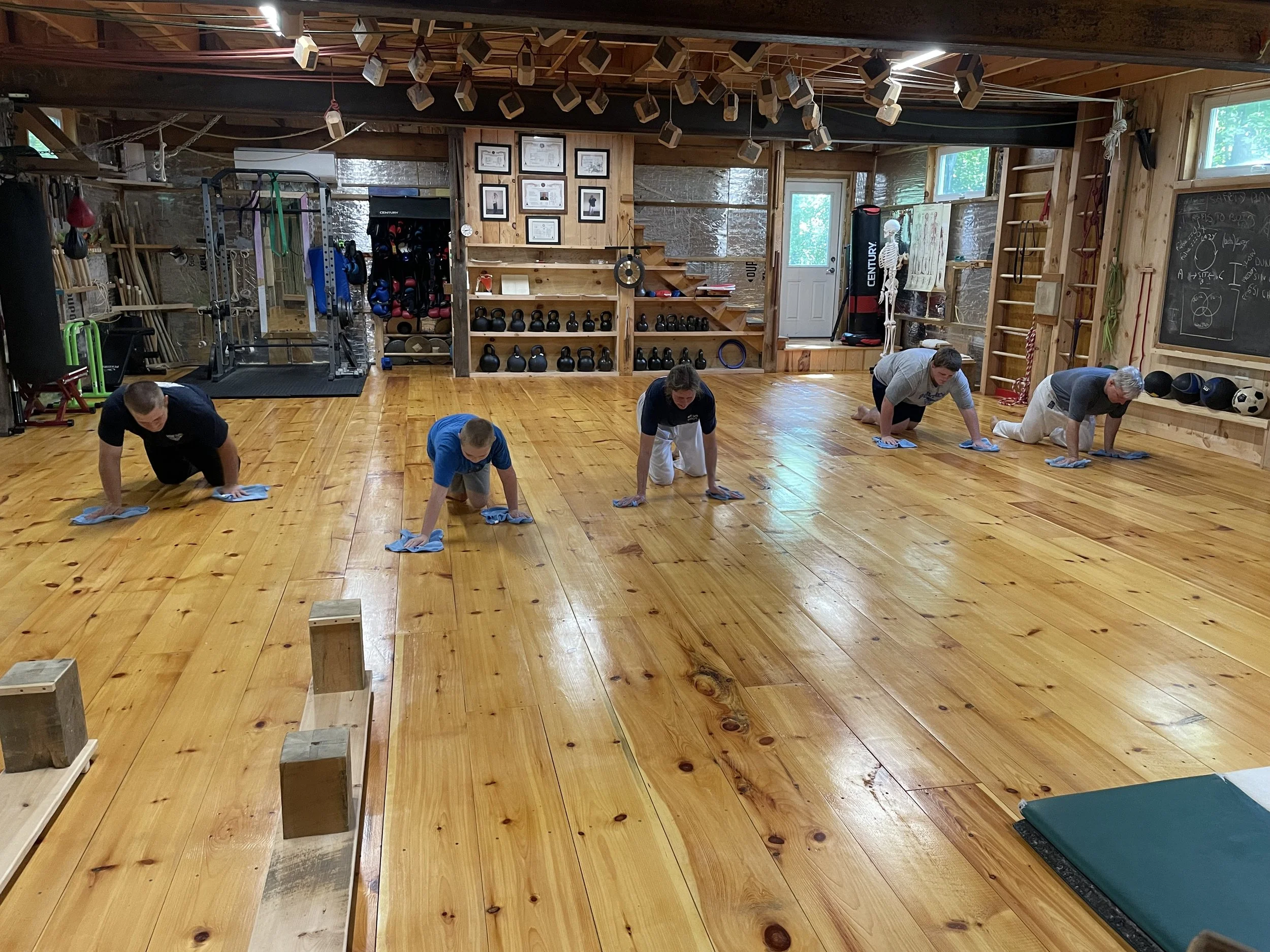
Our system, Whe Chun, is a descendant of the Mongolian Chou Con Di system of Kung Fu Wu Su. We emphasize physical and mental conditioning in the practice of combat. Our students develop skills passed down over centuries from masters of Grace, Power and Mind- Control. They learn to deploy these skills respectfully and appropriately throughout their lives.
Conditioning and Rehabilitation
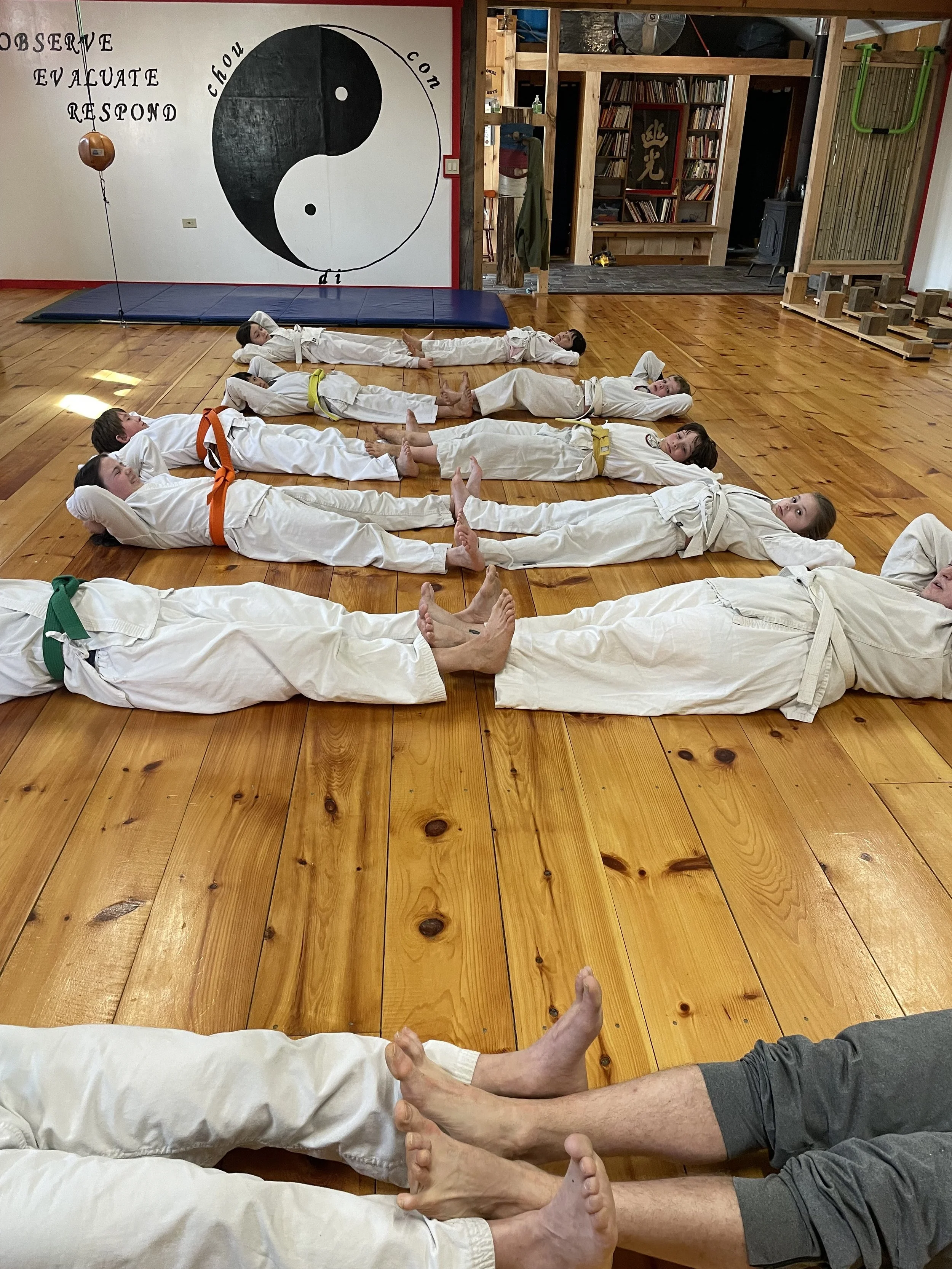
Living gracefully with the strength, balance, agility and flexibility of youth becomes increasingly difficult with the passing of time and the accumulation of illness and injuries. Our program offers the understanding and practice of activities that will help maintain your best possible self for the longest period of time.

Defense, Agency, Security
Security is basic. It is second in Maslow’s hierarchy of needs, right after air, food and water. Effective self-defense begins with respecting ourselves and others. It proceeds through learning to observe, evaluate and respond to each situation. We provide training in the awareness and resolution of security threats across many areas of life, such as physical, mental, psychological, social and virtual.
- Our House is Open - Come Check Us Out - Whe Chun System - South Poultney Dojo
- Our House is Open - Come Check Us Out - Whe Chun System - South Poultney Dojo
Our House is Open
Martial Arts in Poultney, Come See what We Do
Contact Terry Bergen; Text 802-345-0471, He will give you a tour
Become an Agent of Your own Success
South Poultney Dojo is a Community Center
First Month of Classes Free for any Family who Attends
We will show you, and help you practice, any of the following that interests you
Self-Defense
Body-Weight Strength-Training Cardio Fittness
Flexibility and Physical Relaxation Kettlebells
Physical Balance Mental Balance
Meditation and Mental Relaxation Sensitivity and Observation
Rehabilitation and Longevity
It is well known that there is a powerful link between exercise and symptoms of depression and anxiety; scientific evidence supporting this relationship continues to grow! Recently Munro et al. (2026) published a meta-meta-analysis of this relationship. Meta means they combined studies to increase the power of the analysis; meta-meta means they combined meta-analyses. These combinations got them to a sample size of almost 80K! Evidence was overwhelming: exercise, especially group exercise, had a significant beneficial effect on symptoms of both depression and anxiety.
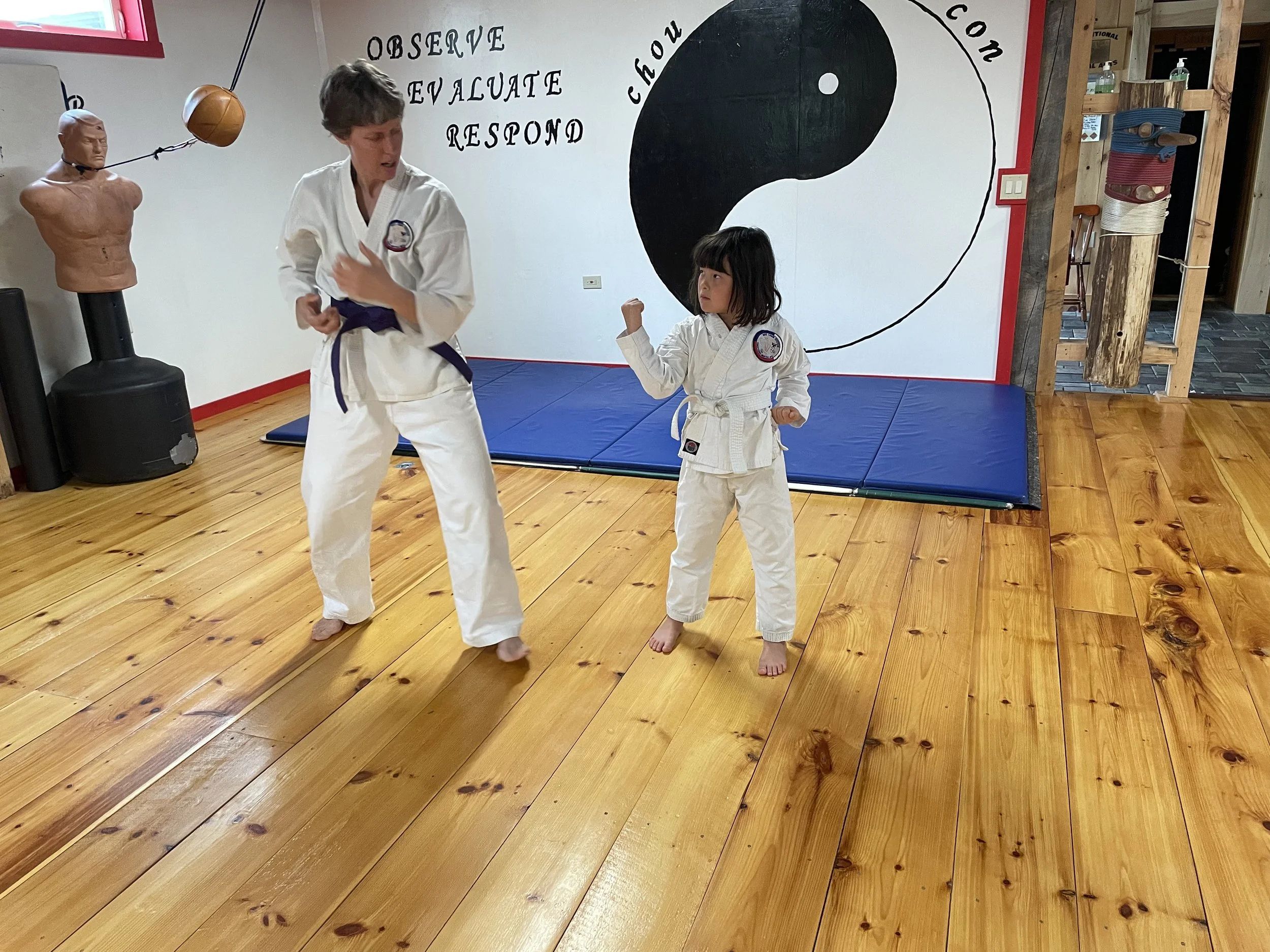
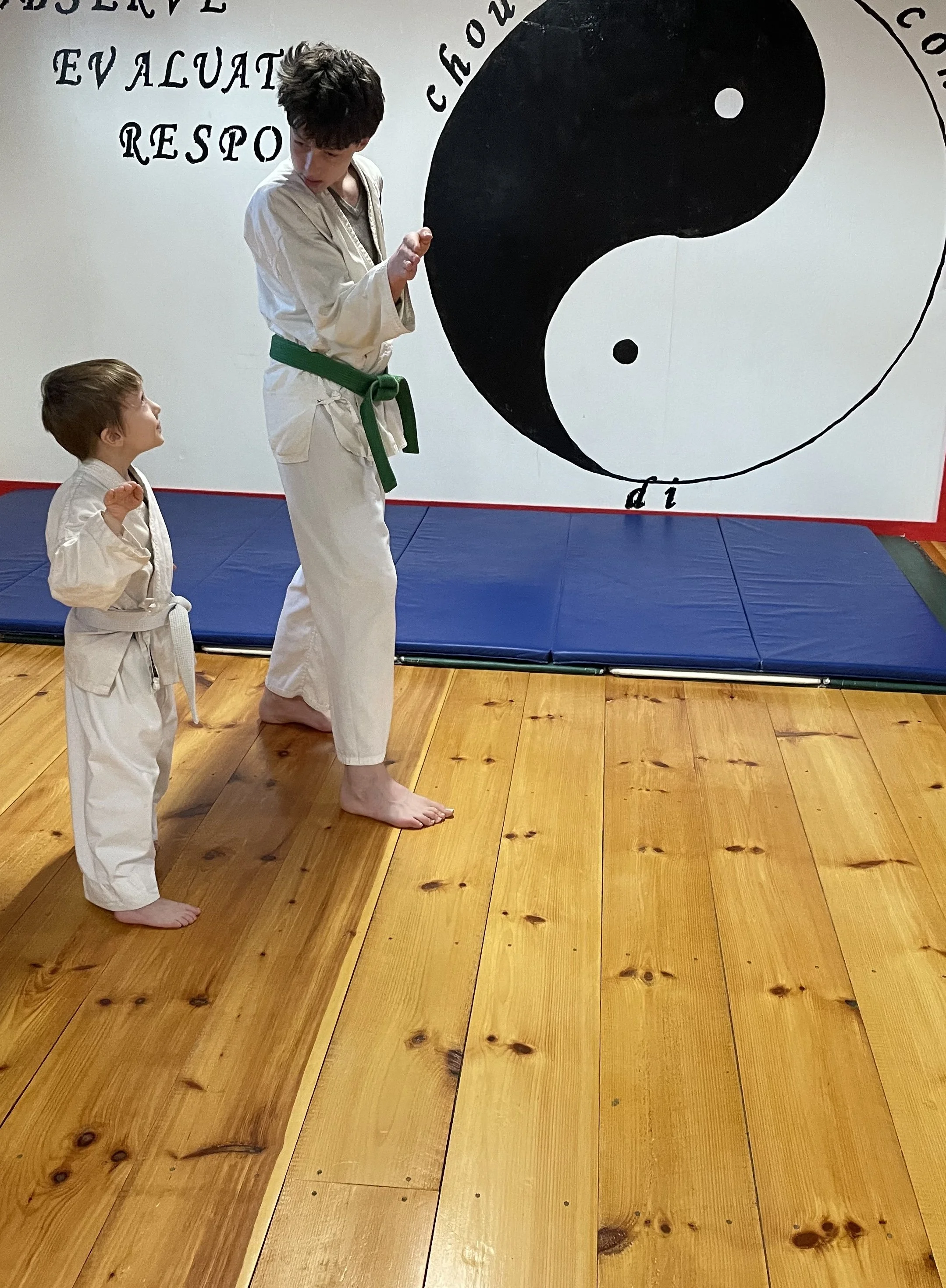
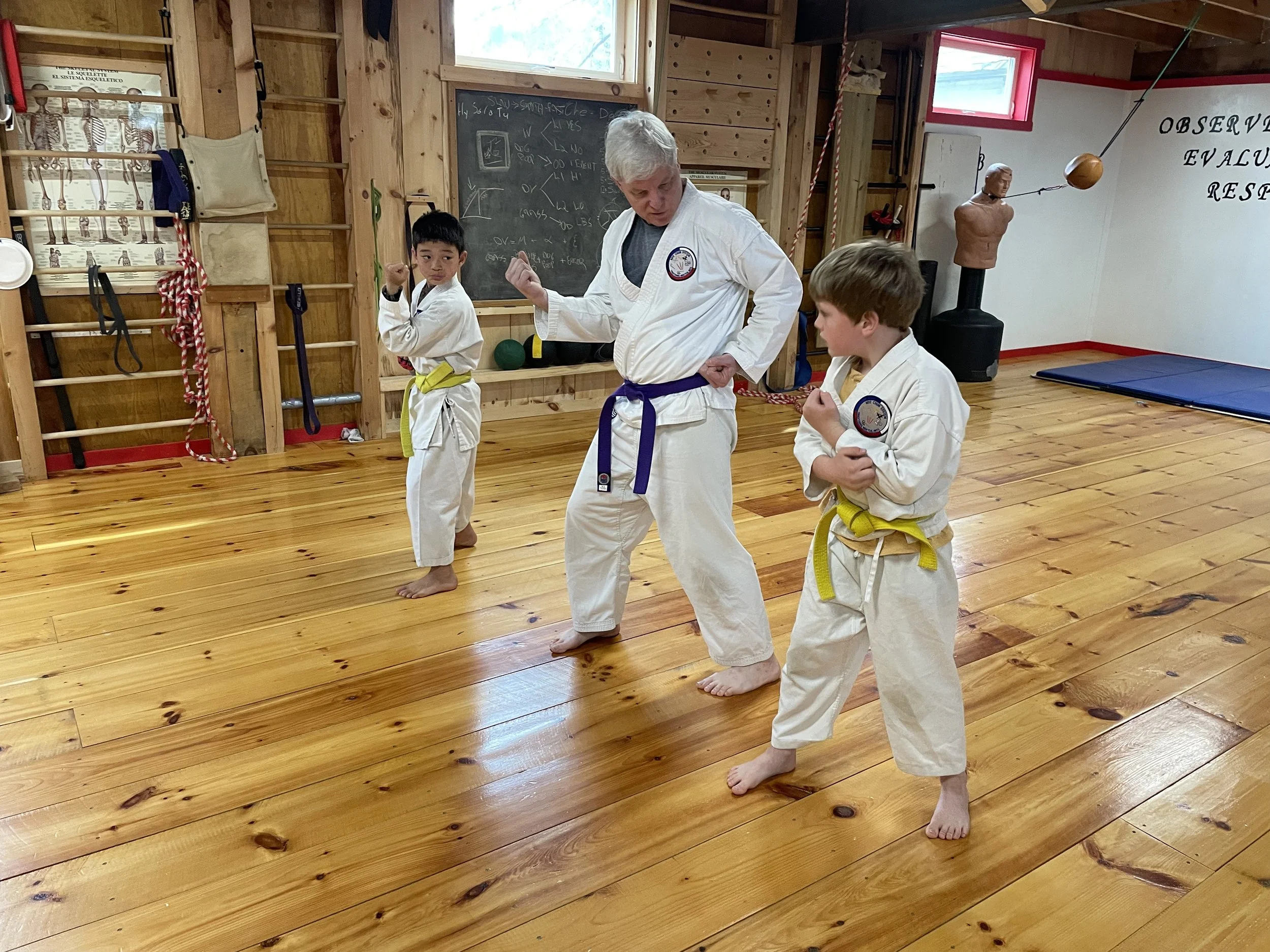
In our system we exercise for strength, flexibility and cardio, often in a group format: body-weight exercise, calisthenics, partner-exercise, kata, one-steps, hanging from things. Group exercise is often accompanied by a chanting of the repetitions of a particular exercise. We count in a dialect of the Mongolian language: ty, toine, dyne; one, two, three. Many exercises are done to a four count so the exercise count happens in the form of a chant: ty, toine, dyne, ty; ty, toine, dyne, toine; ty, toine, dyne, dyne… This chanting brings the group together into a unit. The pace of the exercise can be changed by adjusting the speed of the chant. The chant draws individuals up to a higher pace than they might go on their own as well as holds them back from racing through the appropriate movements. You can add reductions of depression and anxiety to the list of goals for our exercise program!